


2018 NUOVE CATEGORIE
The sounds, colours and scents of the Edible Orchestra: bearers of a profound message
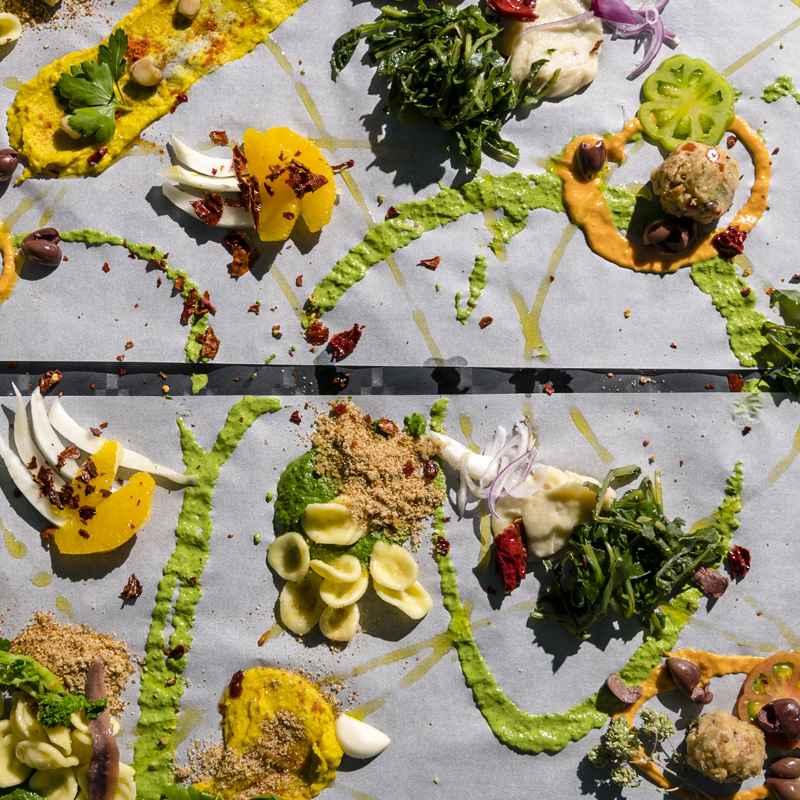
A series of concerts, live performances and book presentations dedicated to food and its role not only as food but as a tool for socialising and creativity and an essential commodity for the well-being and economy of a community that can influence environmental equilibrium and stimulate social responsibility. Edible Orchestra offered a programme of innovative activities aimed at spreading these principles which, with the involvement of Italian and European artists, has seen the active participation of citizens.
The initial choice of venue for these events was the fruit and vegetable market, a meeting place and symbol of spontaneous gathering where it is possible to choose and express stances and which lent itself well to the message to be disseminated. The not too favourable climate did not stop the activities but unfortunately meant that they were transferred between the nearby Community Centre of Matera 2019 and the Gervasio auditorium.
On 9 and 10 April, the food designer Nick Difino led dozens of cultural inhabitants and temporary citizens in the preparatory workshops for the performance on Thursday of Les Tableaux Mangeants, an installation consisting of edible elements where food transcends the plate and becomes a palette of colours with which to experiment and seduce. Three days in which we went from talking about foods from memory and tradition to a shared selection of dishes to be cooked, from a lesson in the history of art to sharing the essential notions behind the choice of dishes that responded at the same time to both sentiment and the aesthetics of the work.
Before the artist's performance, there was a presentation of the book by Federico Valicenti Dalla tavola lucana al paradiso, a reading to be decanted like a fine wine. The Basilicata-born chef spoke to us about food as a metaphor for life and sharing because at the table you must be in good company to truly understand the essence of the dishes.
On 12 April the presentation/performance format was repeated with the journalist Stefano Liberti who in the afternoon transported us to the world of large-scale distribution with the book written together with his colleague Fabio Ciconte 'Il grande carrello. Chi decide cosa mangiamo'. At 20.00, Daniele De Michele as his alter-ego Don Pasta presented UNITED FOOD OF MATERA, an original multimedia performance based on the testimonies of eight citizens of Matera and their authentic relationship with food and cooking followed by a 'Cooking DJ Set': vinyl and pots, mixers and blender for a spicy DJ set of sounds from the whole world, including funk, reggae, South American and Mestizo London. A performance where you give yourself over to the excitement of food, its aromas, colours and forms.
On the final evening of Saturday 13 April, the headline event, a concert from the Vegetable Orchestra, was the first of its kind in the world. The distinctive feature of the Viennese ensemble is to perform only with musical instruments made from fresh fruit and vegetables, which for Matera 2019 were created together with temporary citizens.
Aided by drills, knives and screwdrivers, musicians and citizens have turned carrots into flutes or xylophones, leeks into violins and radishes into saxophones. For the concert in Matera an exceptional vegetable, the Crusco pepper, was used to introduce an original version of Stravinsky’s 'Le sacre du printemps', renamed by the orchestra as 'Le Massacre du printemps'.
The mix of sounds produced by vegetable instruments create an unusual and extremely rich universe of acoustics (not to mention the aromas that flood the environment) that could not be achieved with traditional instruments. And the effect is surprising from the very first notes.
Here are a few figures on the vegetables used: 30 aubergines, 5 cucumbers, 3 kg of dried beans, 170 carrots of different sizes, 2 cabbages, 10 Savoy cabbages, 3 large pumpkins, 20 leeks, 5 bunches of parsley, 5 bunches of spring onions, 25 white radishes, 3 bunches of salad greens, 8 celeriac, not to mention a number of large red, yellow and green peppers, onions, potatoes and courgettes.
At the end of the concert, which lasted about an hour, the audience gave a standing ovation not only for the Vegetable Orchestra that has been performing all over the world for 20 years, but also, and above all, for their message: the products of nature are indispensable for the community and must be defended at all costs.
The vegetables were provided for this occasion by Coldiretti Basilicata and, after the performance, they were donated to Don Angelo, pastor of the Church of San Rocco, to make a large soup to feed the poorest members of the parish.
We’re looking for singers for the Silent City community opera
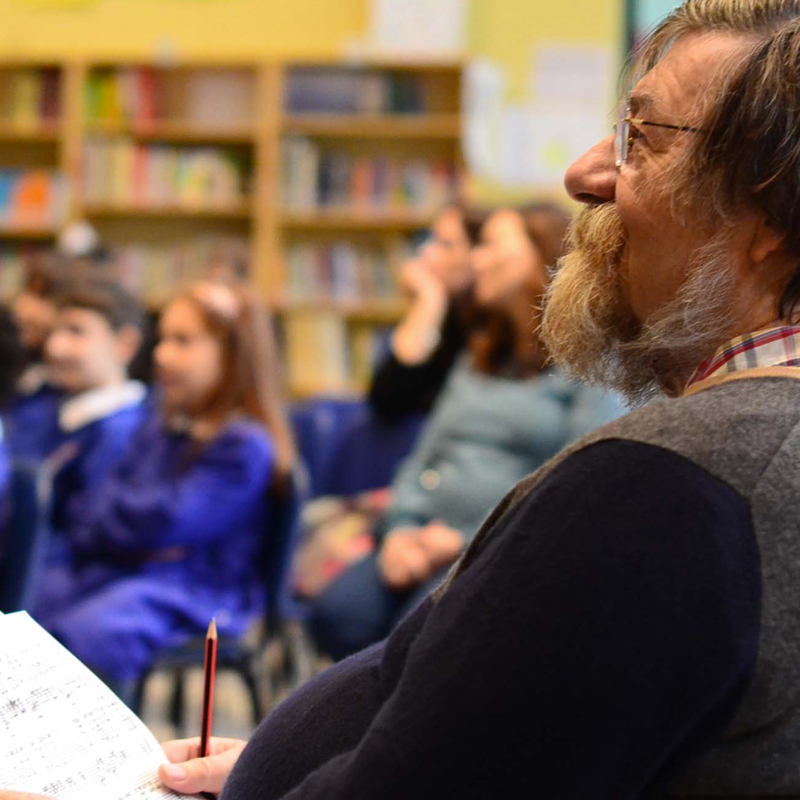
An opera composed with the community, a collective story written by 150 hands that starts from an exploration: the silence that tells of a brusque interruption in the lives of the residents of Matera, once so crowded and noisy. This is Silent City, a story that starts with people, whose privileged voices are those of children and senior citizens – silent generations which lend their voice to the opera, together with composers, musicians, writers, singers, actors, drama tutors and international artists.
The project is co-produced by the Compagnia Teatrale l’Albero, an art collective directed by Alessandra Maltempo and Vania Cauzillo, which has already experimented with new forms of artistic creation for the opera’s new audiences. The innovation of Silent City is to start with a challenge: take the opera where there is no operatic tradition or an opera house. The idea is to recreate the need for a genre, rediscover belonging to a language – the language of theatre in music, which today seems so remote from people.
The community takes on the role of composer and rediscovers opera as a genre for self-expression, in which people can recognise themselves. This is a unique experiment in Italy by Community Opera, which actively involves informal communities coming together in evoking how people lived in ancient times in the Sassi of Matera.
Each phase in the creation of the opera (history, music, libretto, sets and costumes) involves the input of the community, starting from the stories collected by the playwright Andrea Ciommiento – a set designer and curator of relational art projects – who met dozens of children, their families, students, young professionals and senior citizens over 60 in Matera, Potenza and Melfi. The collective story starts with a shared memory: three children from the present who one day escape from the forgotten part of their city – an ancient rocky place where they meet the silence child.