


Home
Gardentopia, the legacy of a new utopia

The cycle of 32 artistic residencies of the Gardentopia project, located in 26 municipalities throughout the region, has come to an end.
In total, there were 3800 participants, 2850 trees and plants put in the ground, 64 workshops and 14 redeveloped gardens. In addition, 13 patches were allocated to individual citizens and 7 to public schools, while as many as 14 performances were held (including performative installations, theatre, dance and music). There were also 4 meetings with all the Municipalities and gardens involved (the 'Green Night', as well as the 3 Gardentopia Days). The results of the project are summarised in 4 original publications and 2 films.
But beyond the figures, which report the project's success in the most direct and flattering way, it is useful to reflect on the legacy of a process like Gardentopia.
Starting from the '4 gardens' pilot that was initiated in 2016 (Agoragri, Pascoli and Giardino dei Momenti in Matera; Boschetto Orizzontale in Potenza), the aim was to replicate the experience of proactive sharing of a public asset throughout the Basilicata region. Thanks to the profile of the resident artists, the outcome exceeded all expectations, triggering a dynamic that could be summarised with the expression 'bidirectional knowledge', which refers to a continuous exchange between the citizens' own knowledge of the region and the artists' ability to create a new ideal.
Evidence of the intense work behind Gardentopia remains, leaving behind a utopia that has opened up new horizons for public spaces by experimenting with innovative practices that bring citizens together.
What appears to be clear and which, most probably, constitutes the most tangible result of the path started by Gardentopia in 2019, is that the citizens, having taken on board some spatial awareness skills, have succeeded in transforming the suggestions given to them by the artists into real practices that they have carried out independently. In this context, the central theme and consequently the project's most important legacy is participation as a constant practice of direct interaction with public heritage.
Essenza Lucano

- Project Leader/Coproduzione/Ecc.:
Co-produced by
Amaro Lucano - Immagine progetto:
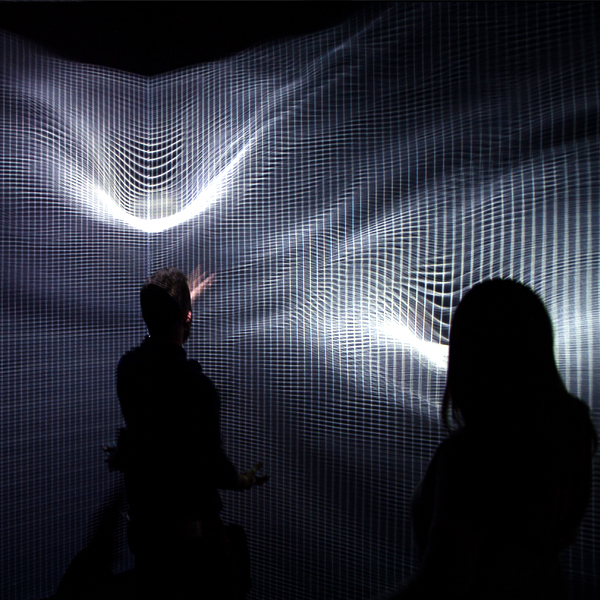
It might seem like the beginning of a fairytal e set in a faraway land, but it really is going to happen, in Pisticci, in 2019. Essenza will be a place, a house, where visitors can immerse themselves in an interactive experience inspired by the world of Amaro Lucano, Essential Partner of Matera: European Capital of Culture 2019.
Matera 3019
- Project Leader/Coproduzione/Ecc.:
Co-produced by
Teatro delle Forche e Scuola Open Source_SOS - Immagine progetto:
- Facebook:
- Instagram:
- Artists:
Giancarlo Luce
Erika Grillo
Giorgio Consoli, Andrea Dellai, Erika Grillo, Ermelinda Nasuto, Chiara Petillo, Fabio Zullino
Walter Pulpito
Mino Notaristefano, Vincenzo Dipierro
Alessandro Colazzo - Evento:
- Campo aggiuntivo 5:
Open Source School:
Sito web
Facebook
Instagram
Curator: Gianluigi Gherzi

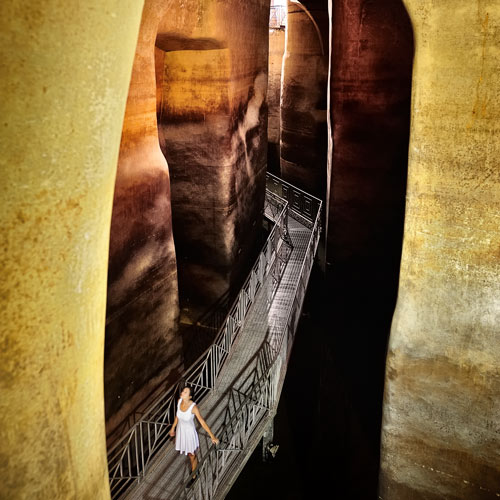
500 years ago Thomas More wrote Utopia. It’s time now to imagine a new world.
Here the idea of a project able to listen to the words and suggestions of youngsters, coming from Italy and Europe, working on the growing divide between the virtual world of digital and the corporeal one of reality.
Onda
- Immagine progetto:
- Project Partners:
"Conservatory of Music “E. R. Duni" of Matera”, Italy
Space Geodesy Center, Italy
Capodimonte Observatory, Italy
Astronomical Observatory of Castelgrande, Italy
Doppiozero, Italy
SisInfLab – Laboratorio di Sistemi Informatici – Politecnico di Bari, Italy
Trieste ESOF 2020 European City of Science, Italy - Artists:
MaterElettrica, Italy
Murcof, Mexico
Scientists: Tommaso Dinoia, Giorgio Dragoni, Franco Farinelli, Luigi Borzacchini, Giuseppe Bianco, Matteo Meschiari - Evento:
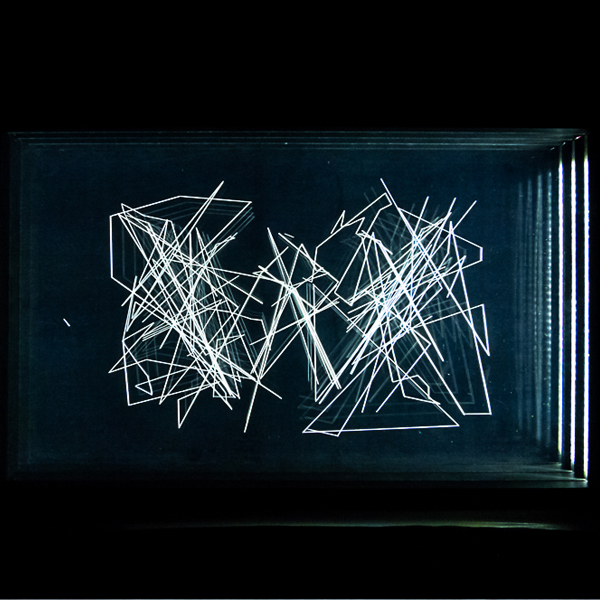
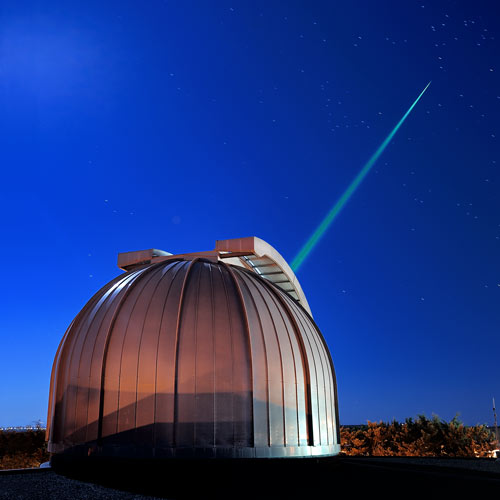
Onda is multidisciplinary: sound, seismic and electromagnetic waves. Onda is multiform: harmonic, rotational and gravitational waves.
Pythagoras had already noticed the transversal fascination of the waves when he maintained that from the observation of a single vibration of the monochord one could discover the microscopic aspects of sound propagation and at the same time study the laws that govern the entire universe.