
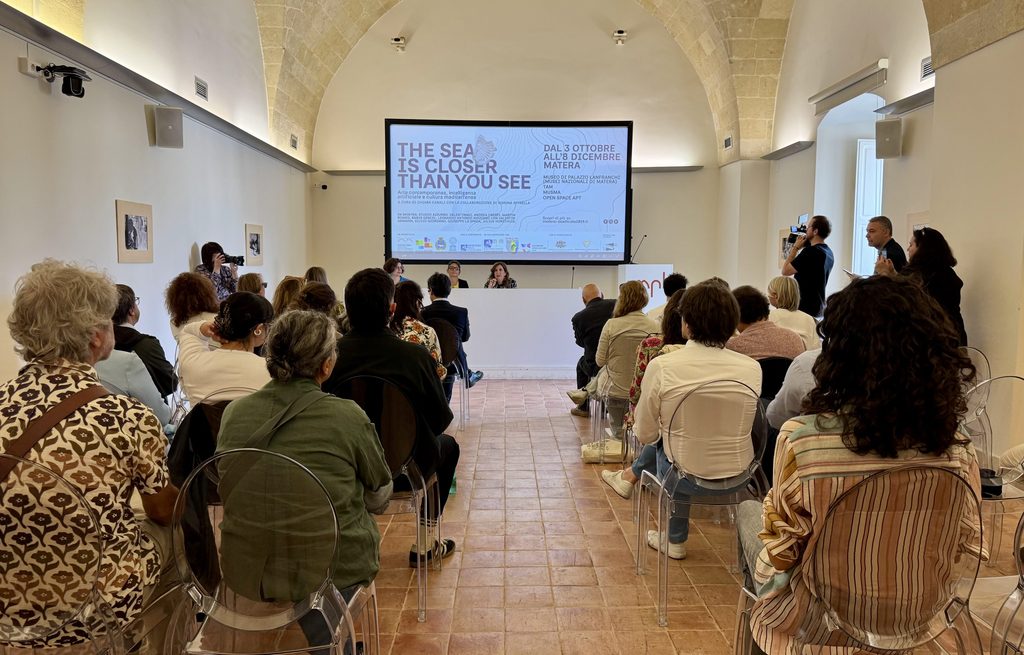
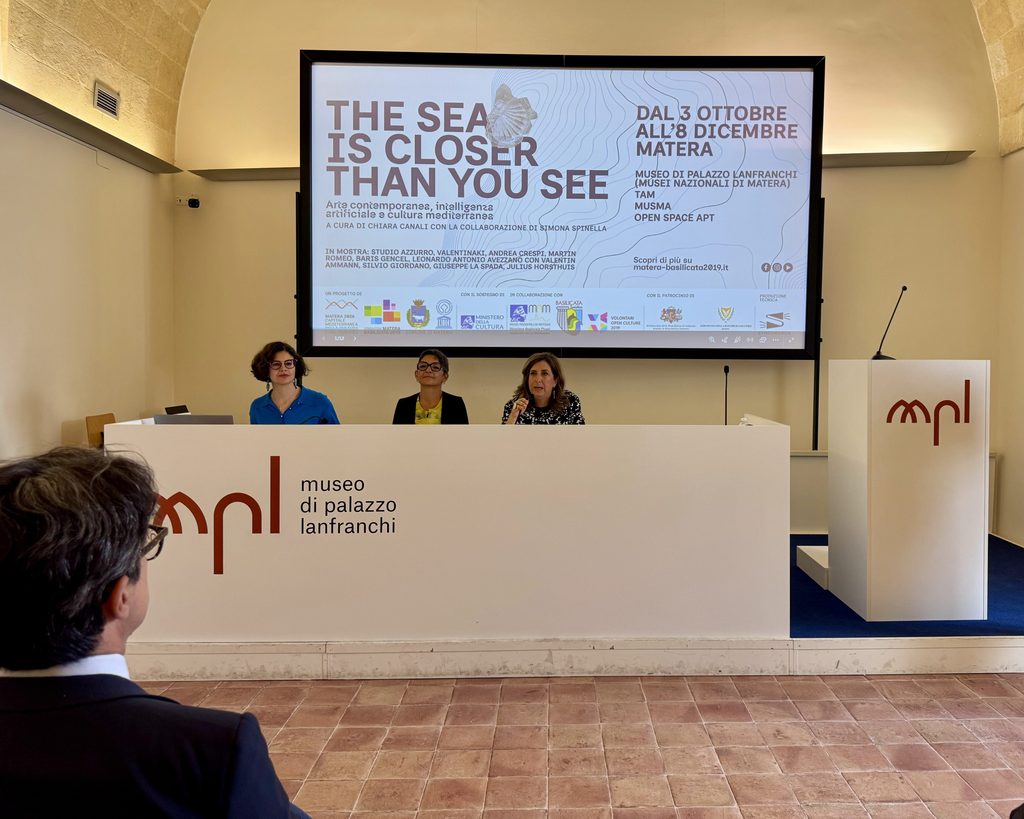
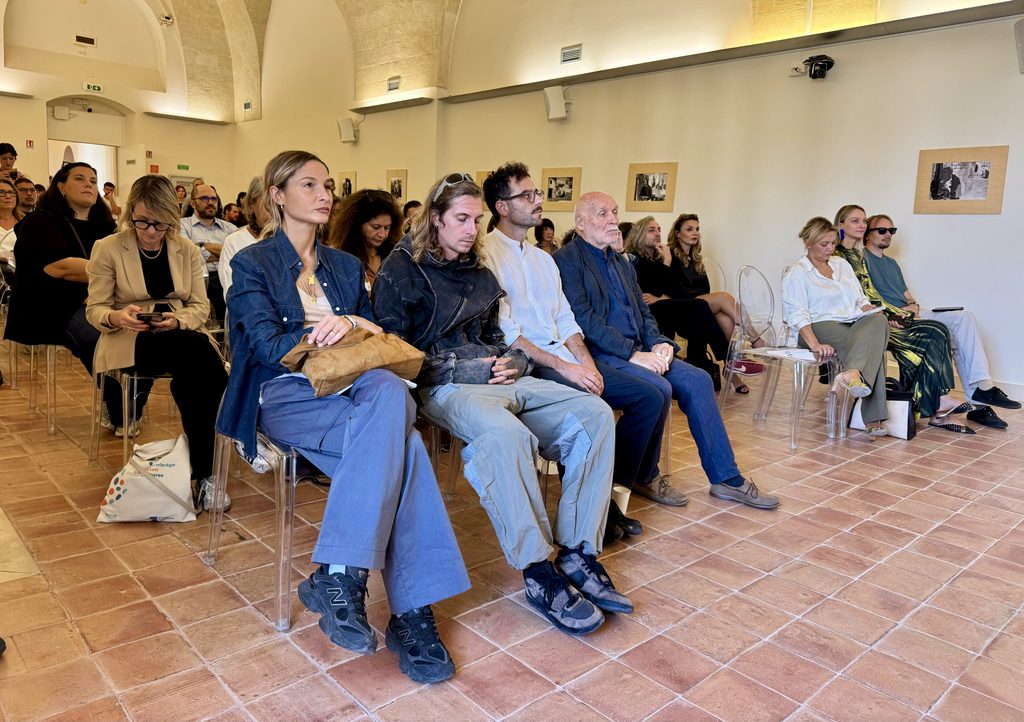
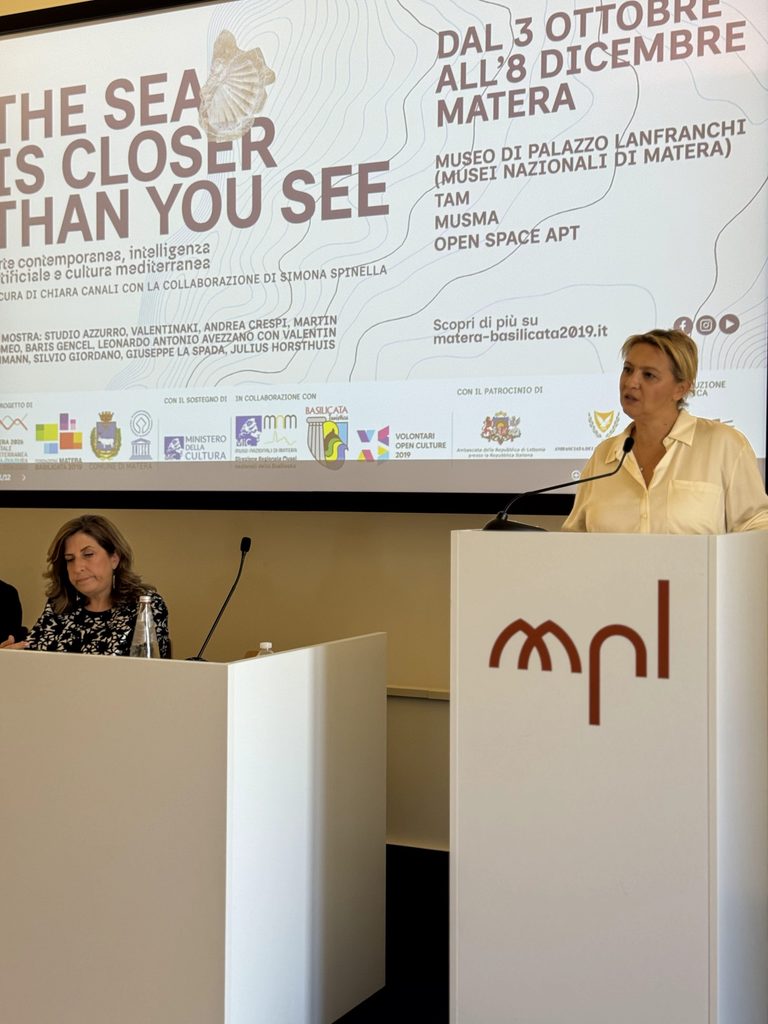
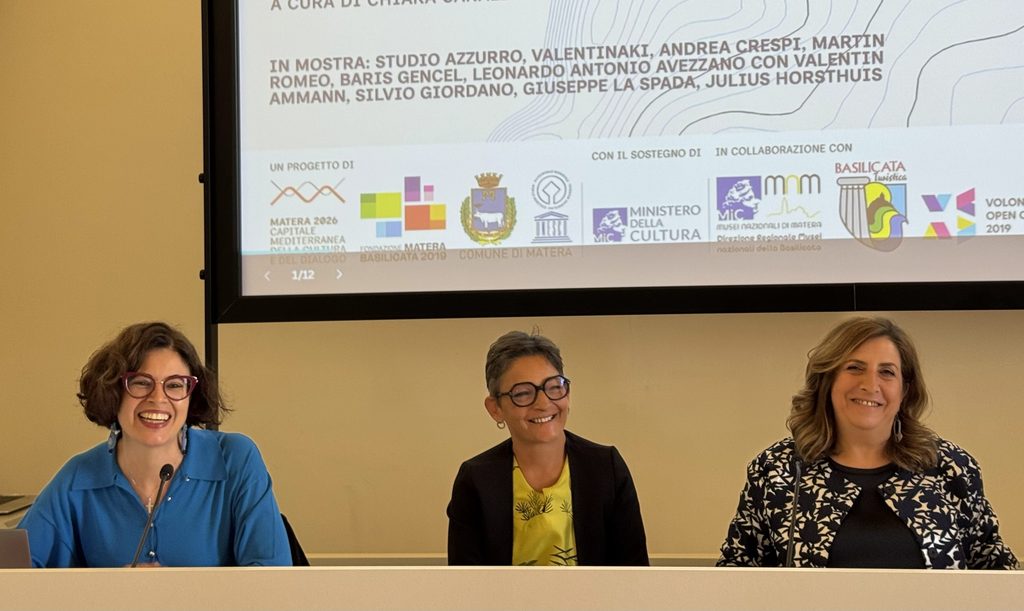
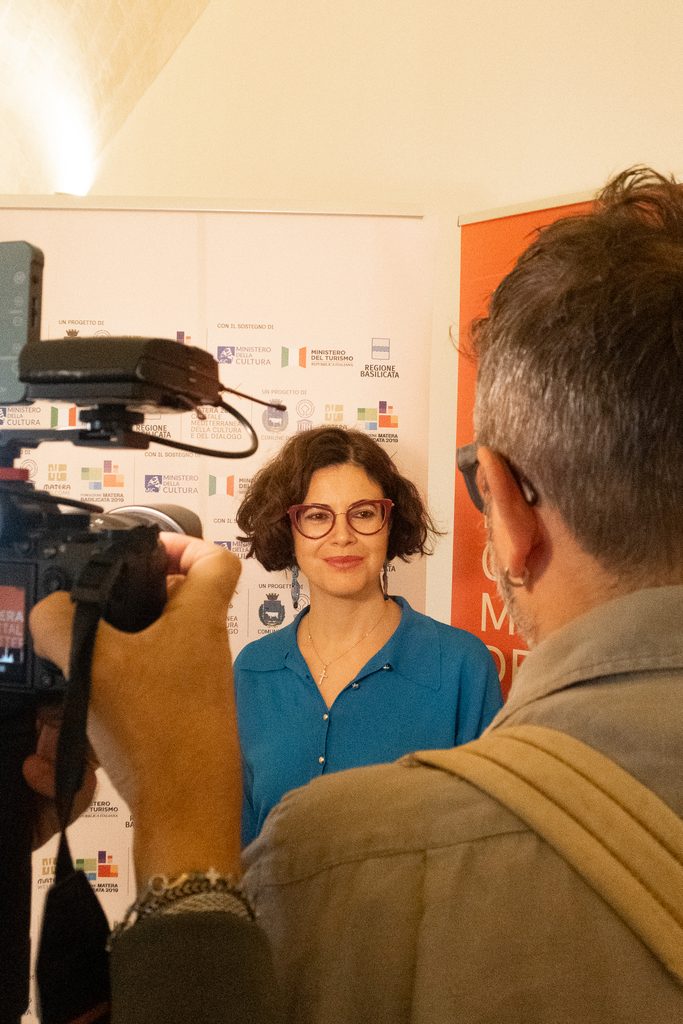
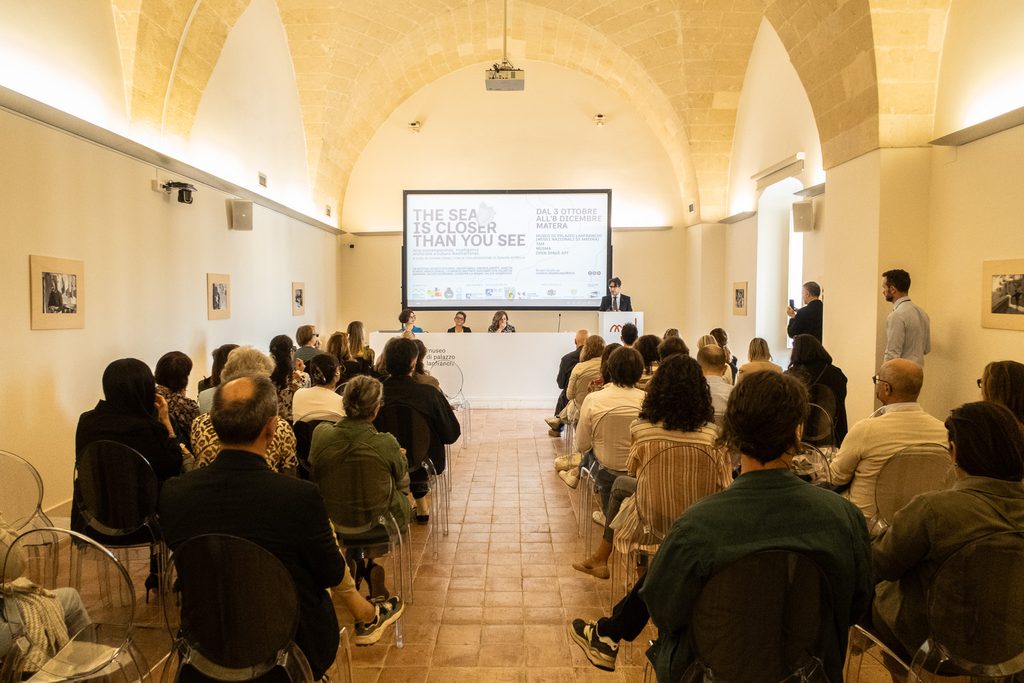
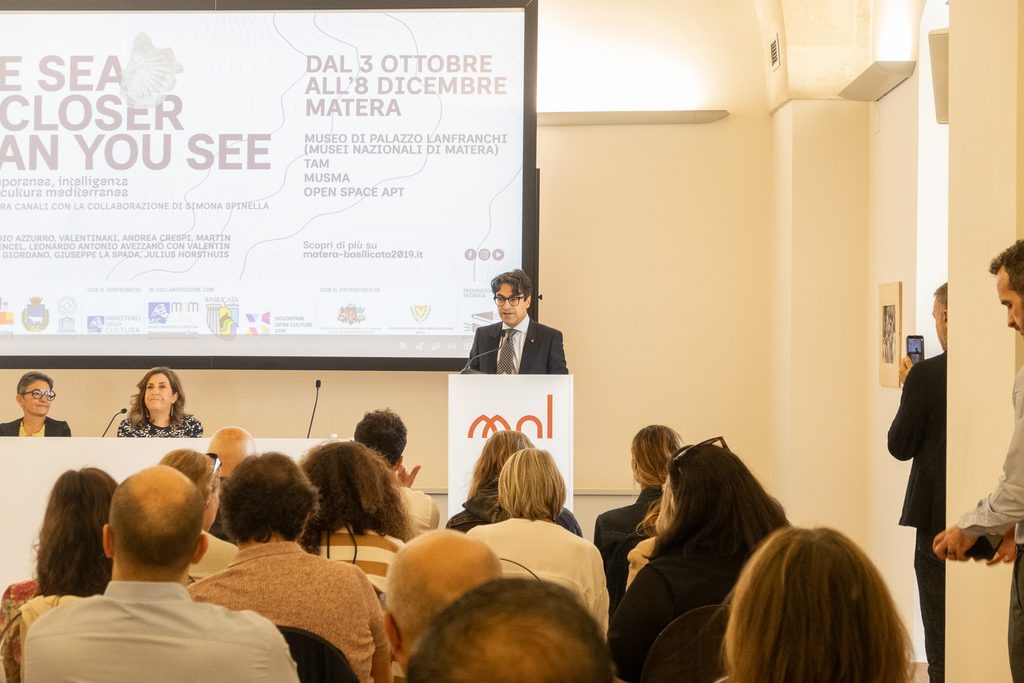
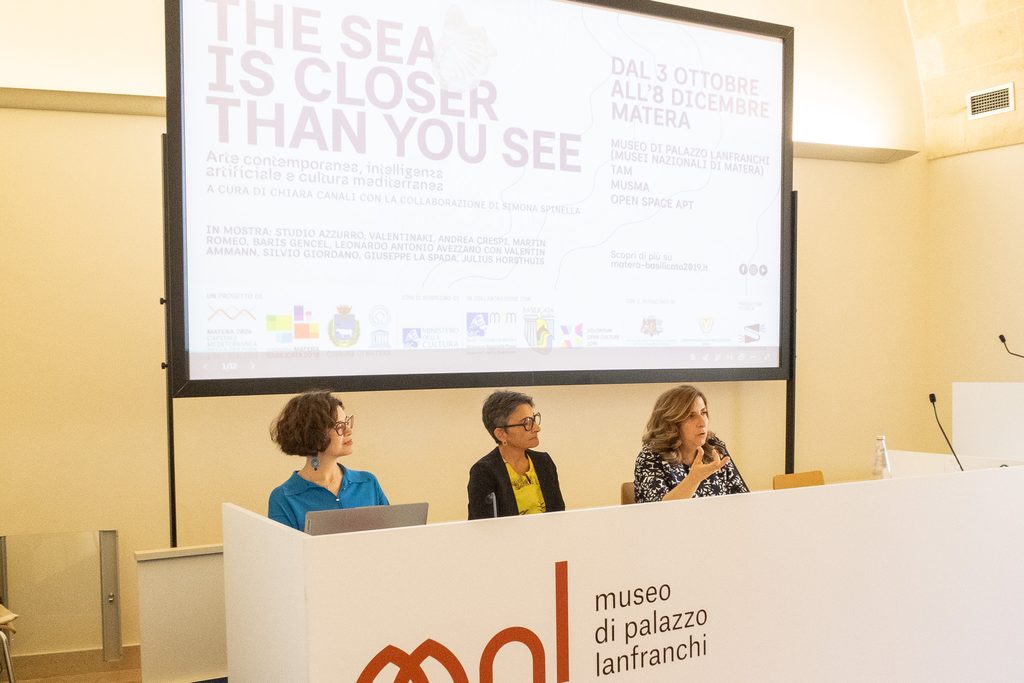
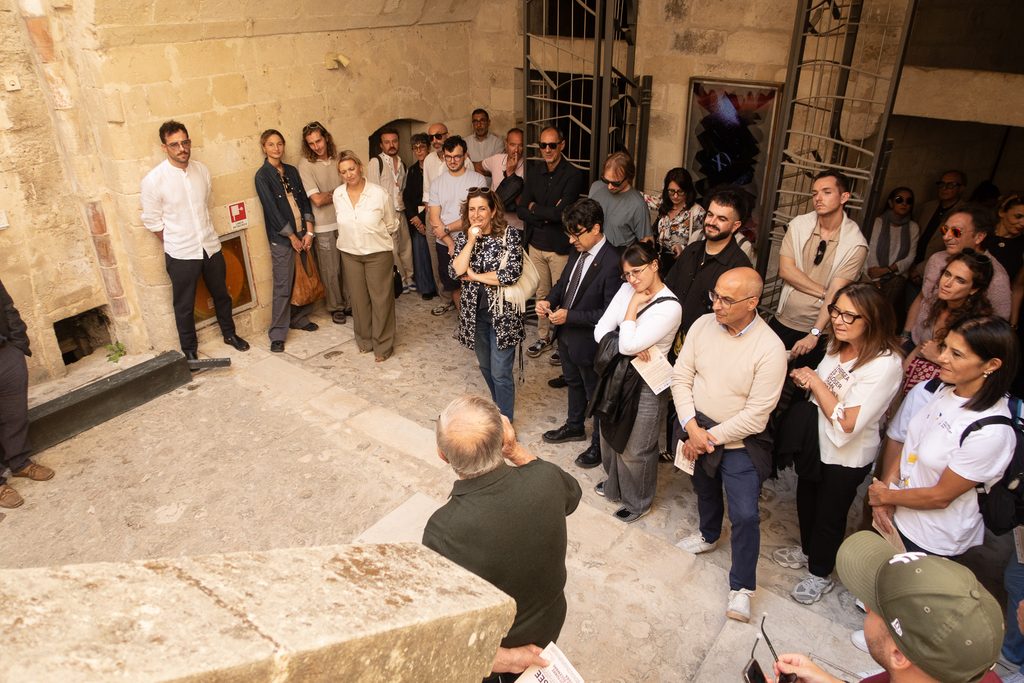
October 3, 10:00 AM – Palazzo Lanfranchi
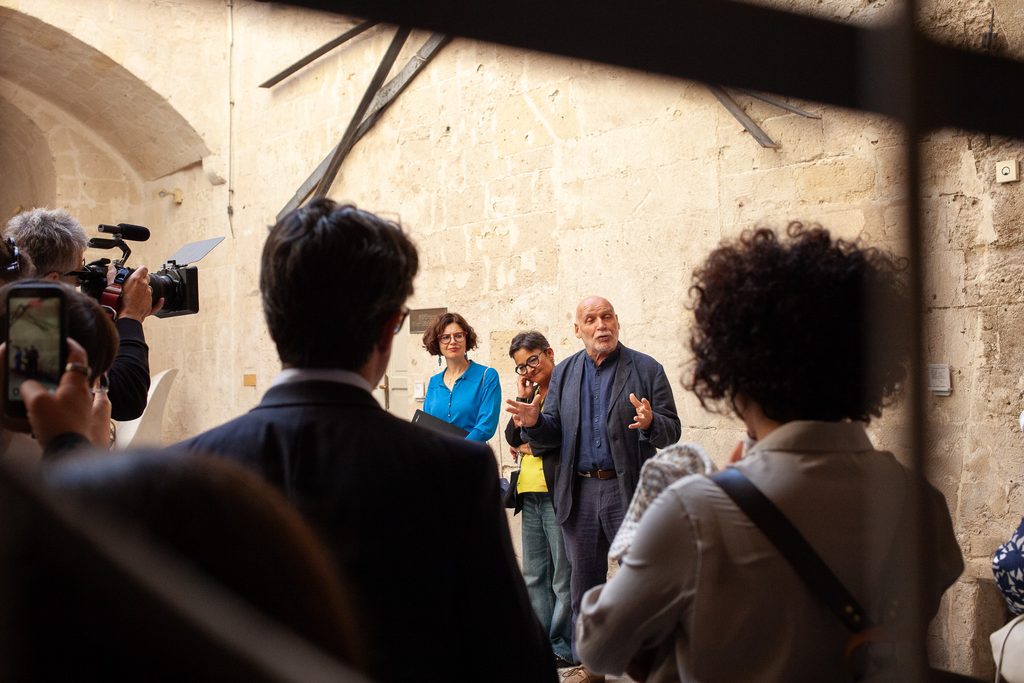
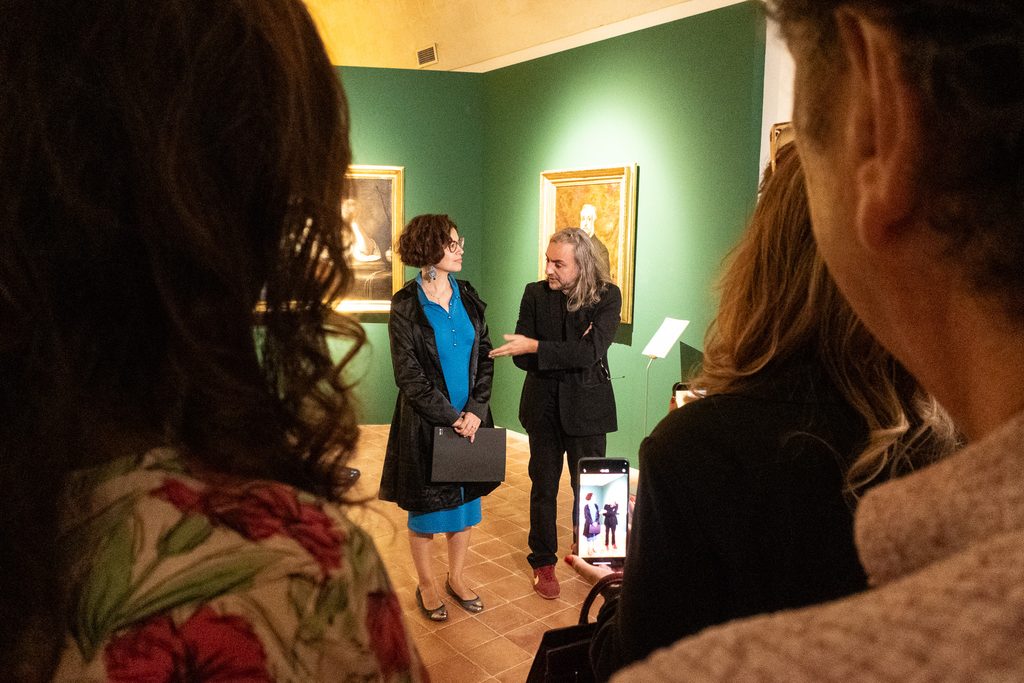
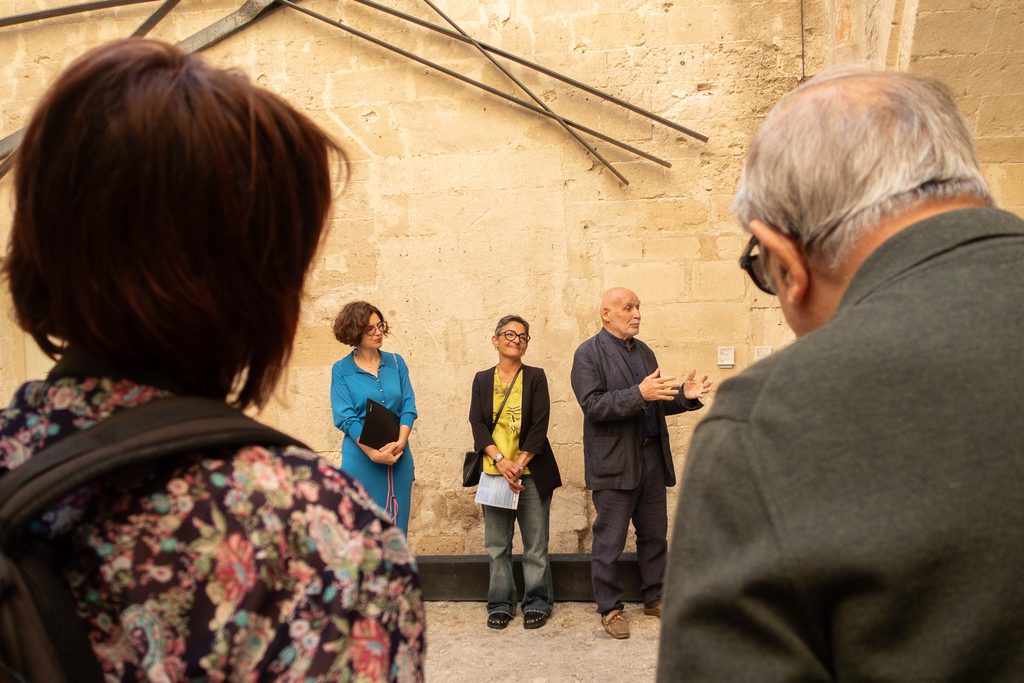
Press conference and public presentation of the exhibition
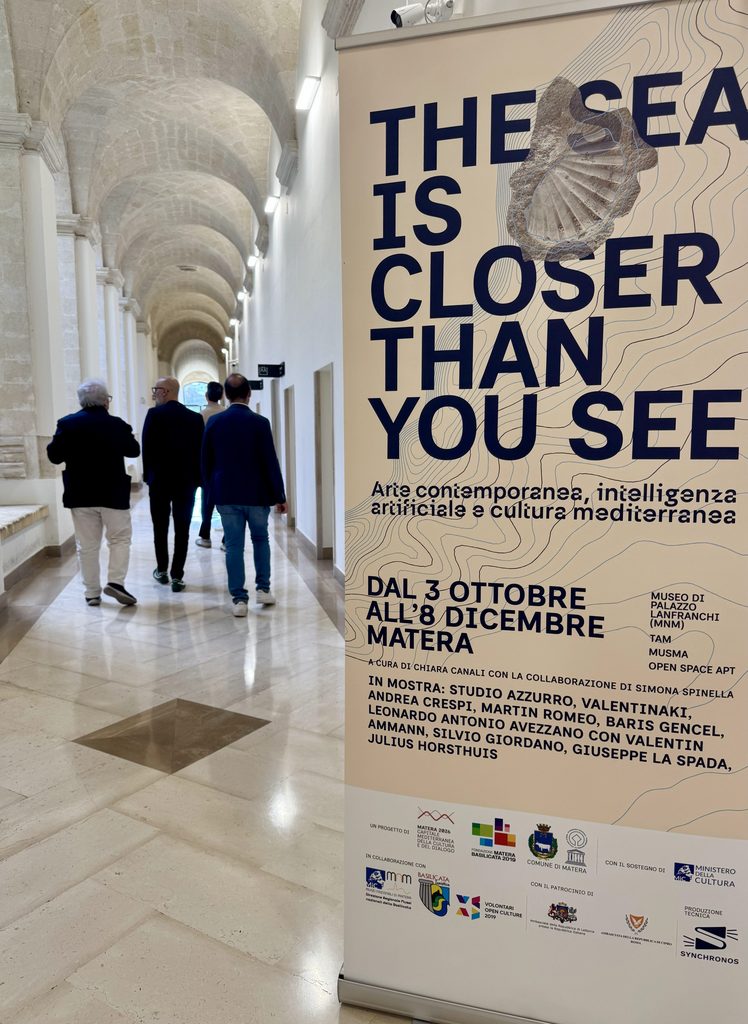
From 3 rd October to 8 th December 2026, Matera will host THE SEA IS CLOSER THAN YOU SEE, a widespread group exhibition dedicated to the relationship between contemporary art, digital technologies, artificial intelligence and Mediterranean culture, curated by Chiara Canali, in collaboration with Simona Spinella.
The project is promoted by the Matera Basilicata 2019 Foundation and the Municipality of Matera, with the support of the Ministry of Culture as part of the programme for Matera, Mediterranean Capital of Culture and Dialogue 2026. The exhibition is organised in collaboration with the National Museums of Matera, the Basilicata Regional Promotion Agency, and the MUSMA and TAM museums. The initiative has also received institutional patronage from the Embassy of the Republic of Cyprus and the Embassy of the Republic of Latvia.
The critical inquiry stems from a seemingly simple question: “how far can the sea be from a place that belongs so deeply to the Mediterranean?”. It takes as its starting point one of the founding statements of the TERRE IMMERSE Dossier: “direct access to the sea is not a prerequisite for belonging to the Mediterranean”. Mediterranean identity, in fact, cannot be defined solely by geographical proximity to the coast. The Mediterranean is also a network of relationships, exchanges, migrations, memories, economies, cultures and transformations that extends deep into the hinterland.
Matera, a city in the Lucanian hinterland, is no exception to Mediterranean geography. Its geological structure preserves the memory of an ancient marine presence: the calcarenite of the Sassi tells of seabeds that have emerged, whilst cisterns, collection systems and underground spaces bear witness to a millennia-long relationship with water. The sea, seemingly distant, is thus
inscribed in the very fabric of the city.
It is precisely this merely apparent distance that forms the conceptual heart of THE SEA IS CLOSER THAN YOU SEE. The title does not refer to a sea to be reached, but to a sea that is already present: invisible yet active, embedded in stone, in images, in memories, in bodies, in human journeys and, today, also in data flows and algorithmic systems.
The works by Studio Azzurro, Andrea Crespi, Martin Romeo, Valentinaki, Leonardo Avezzano with Valentin Ammann, Baris Gencel, Giuseppe La Spada, Silvio Giordano and Julius Horsthuis establish a dialogue between different practices: video installation, photography, holography, sound installation, generative art, artificial intelligence, computer vision and immersive
environments.
The exhibition interprets the four core themes of TERRE IMMERSE – Stratifications, Isolations,Contaminations and Transhumance – as four distinct ways of interpreting the contemporary Mediterranean: a territory of geological and cultural sedimentation, a space of relationship between centre and periphery, a place of encounter and hybridisation, and a theatre of mobility, migration and the circulation of people, languages and knowledge.
The reflection of curator Chiara Canali finds a particularly significant point of reference in Franco Cassano’s “Pensiero meridian”, which invites us to consider the Mediterranean as a space where differences enter into relationship. The sea, in its very etymology, is mediterraneus, that which lies “in the midst of the lands”: it does not merely separate, but connects. Distance from the coast
therefore does not coincide with distance from the Mediterranean. From this perspective, Matera becomes a sort of Mediterranean “archive-city”, in which different times, cultures and geographies overlap. The exhibition does not present a unified image of the Mediterranean, nor does it reproduce its traditional postcard-style iconography. On the contrary, it highlights its plural, layered, fluid and conflictual nature, bringing to light often invisible connections between territories, communities and natural systems.
A DISTRIBUTED EXHIBITION TRAIL
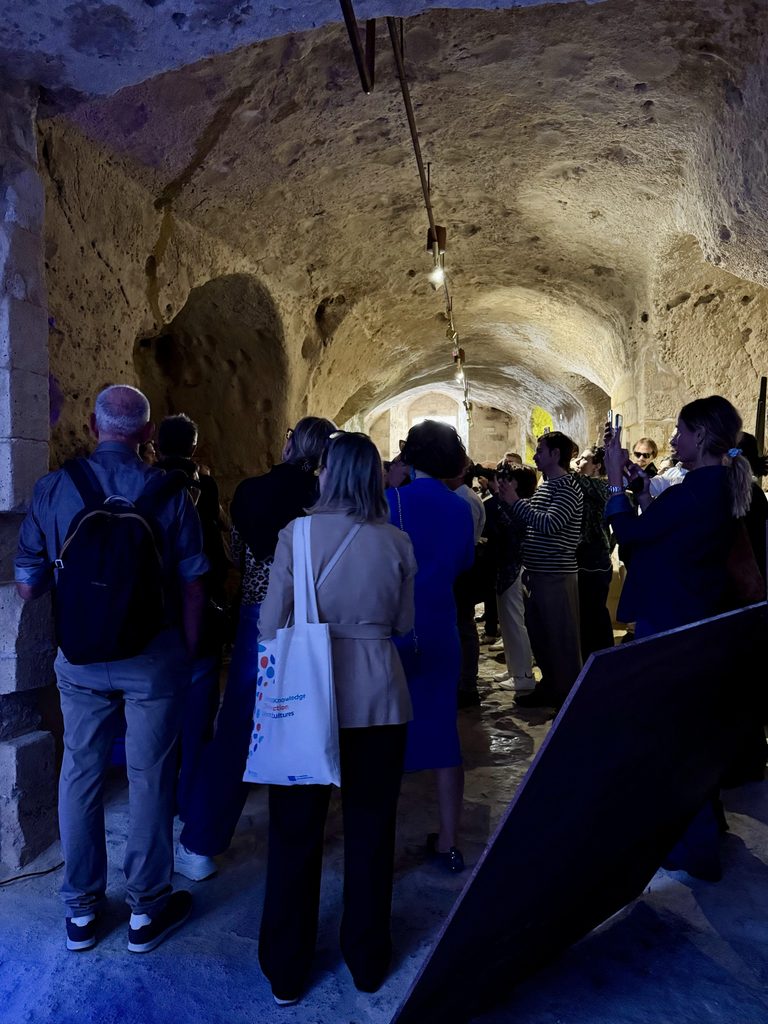
The exhibition trail unfolds across four venues in Matera’s historic centre – from Palazzo Lanfranchi to the TAM Museum, and from MUSMA to the APT’s Basilicata Open Space – creating a constellation of sites and institutions that transform the city itself into an exhibition landscape. Visitors are invited to embark on a terrestrial journey between the Sasso Caveoso and the “Piano” (the modern city centre), crossing the rocky divide and experiencing the transition from stone to data, from memory to landscape, and from physical matter to the digital realm.
The city thus becomes an integral part of the experience, a geography to be traversed where stone, water, memory, data, and landscape converge. Throughout this itinerary, which blends contemporary art, digital media, and Mediterranean heritage, water serves as the unifying thread, never taking on a single, fixed form.
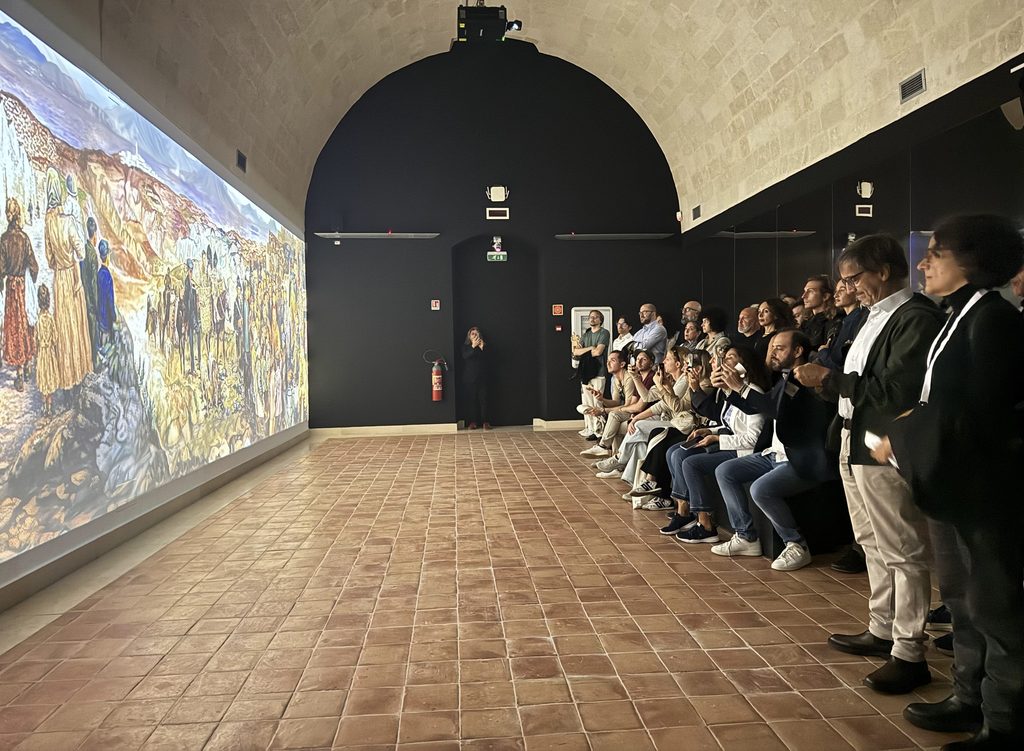
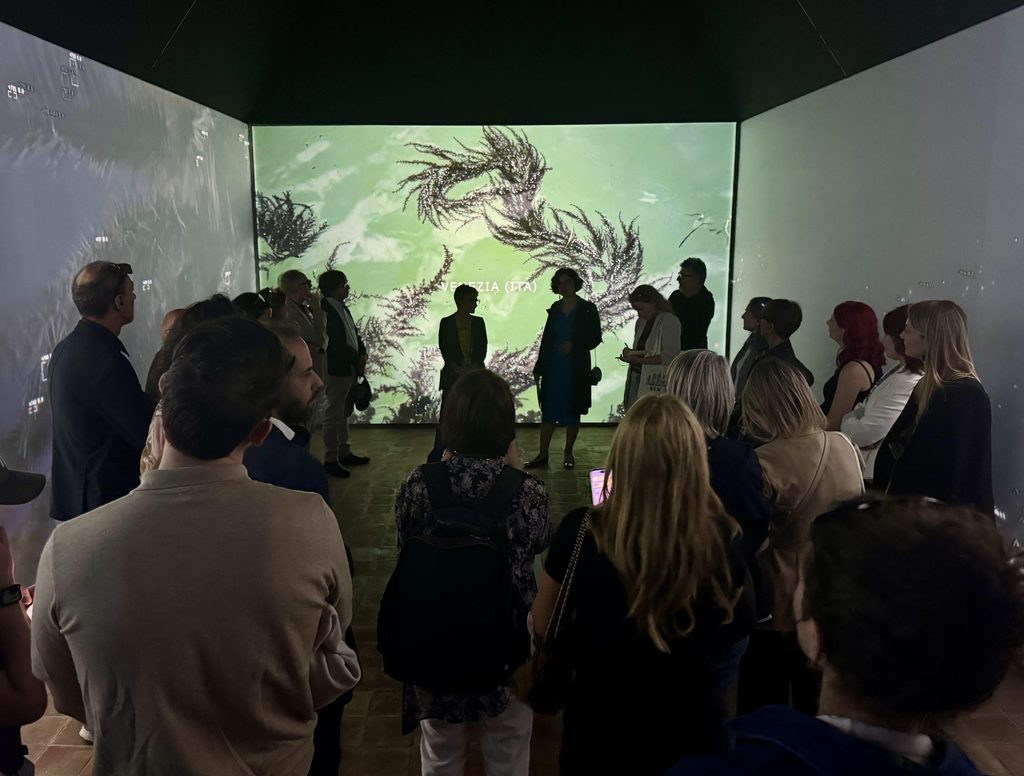
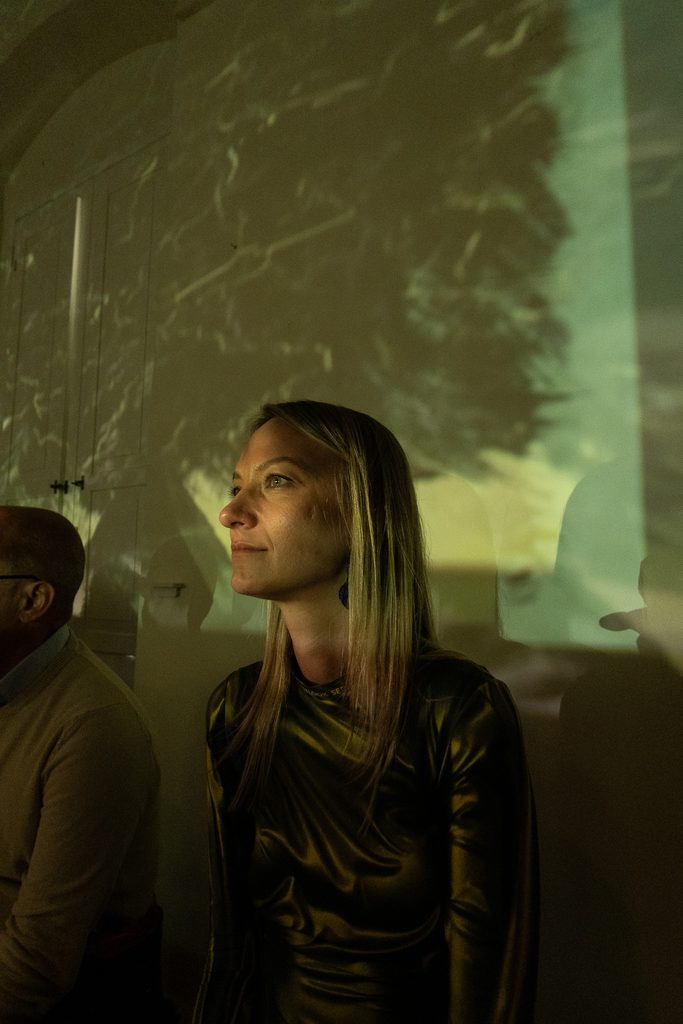
At Palazzo Lanfranchi, within the two immersive rooms dedicated to the Levi and D’Errico collections, the journey begins with WATER: Always different, always the same (2026) by Giuseppe La Spada. This video installation gathers and reinterprets fifteen years of water imagery, transforming it into a kind of liquid map that connects the waters of various Mediterranean
cities and territories.
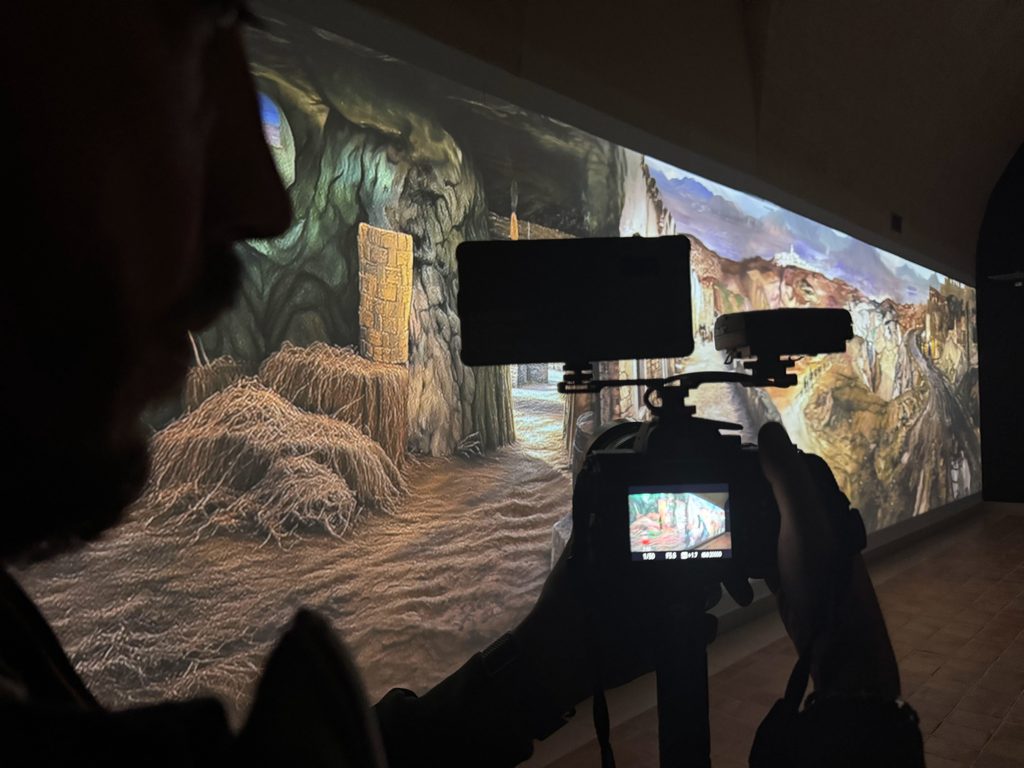
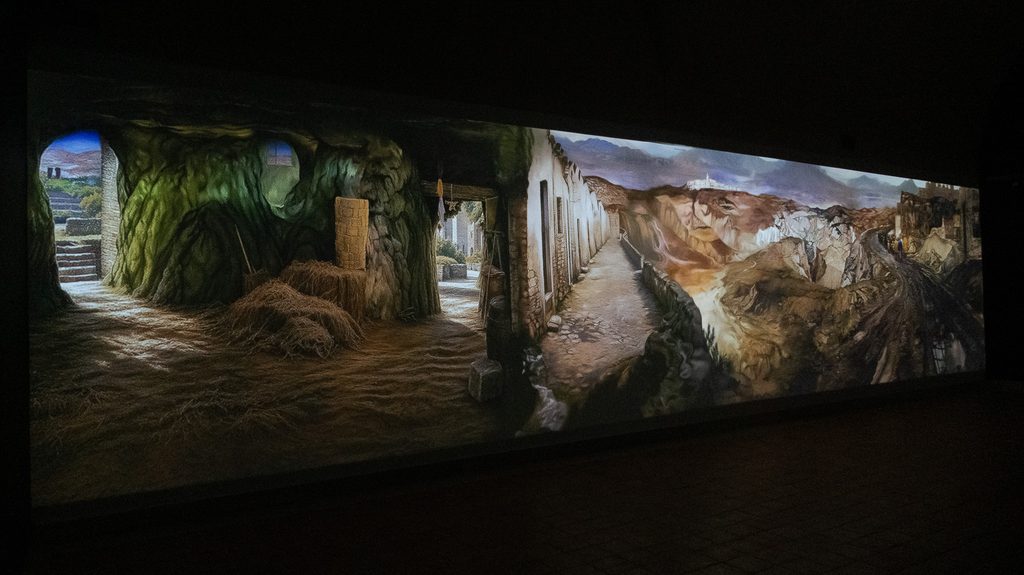
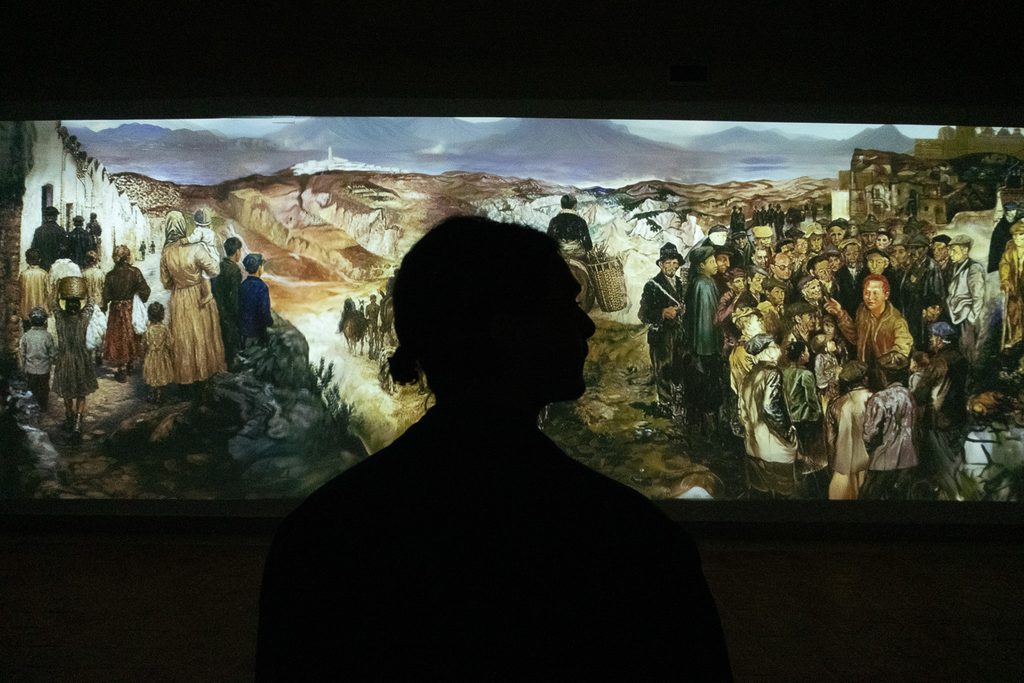
In the D’Errico Room, Lucania 2026 (2026) by Silvio Giordano engages in a dialogue with Carlo Levi’s Lucania ’61. Using artificial intelligence, Giordano reinterprets the sense of community centred around Rocco Scotellaro and the relationship with the land, offering a contemporary reflection on themes such as depopulation, emigration, and the future of Basilicata.
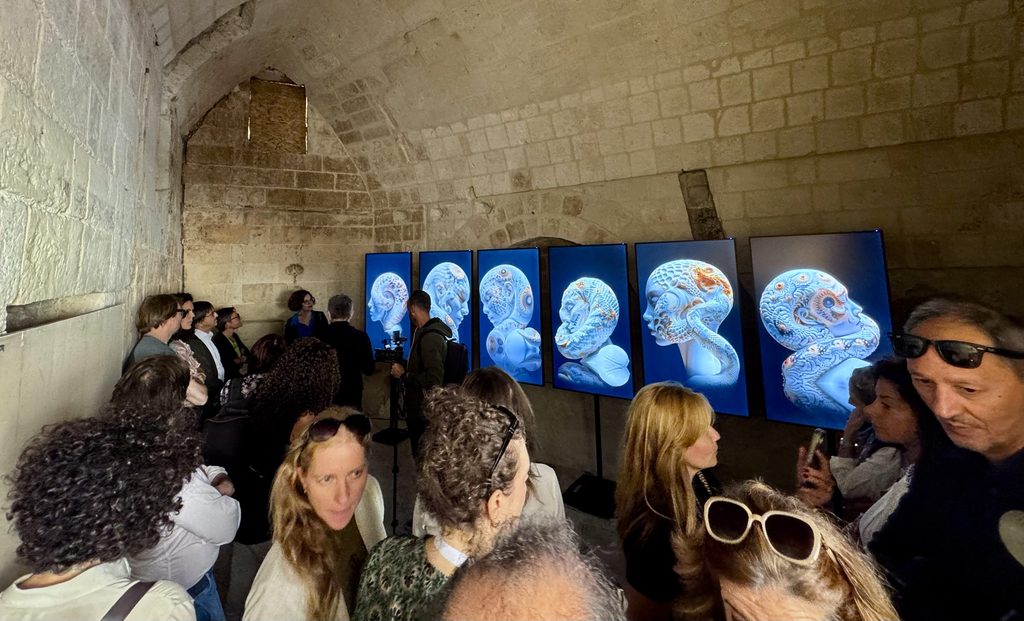
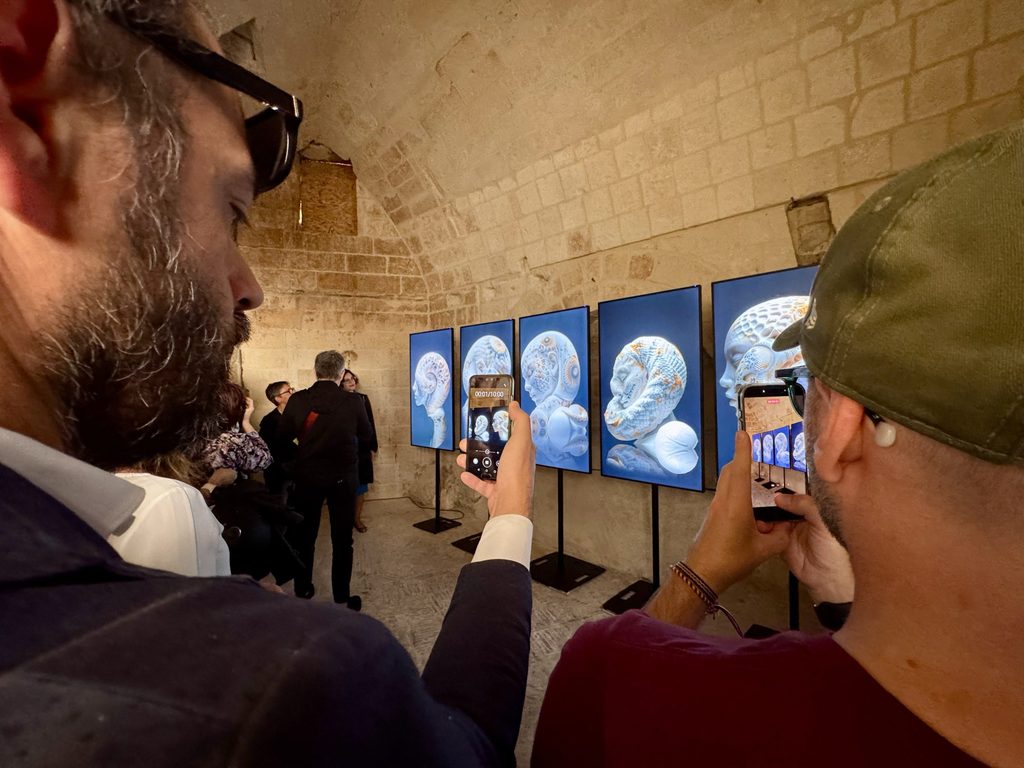
At the TAM (Tower Art Museum), Cypriot artist Baris Gencel presents The Forgotten Sea & Memory of Stone, a work that uses artificial intelligence to reinterpret Matera’s geological and marine history. Human faces, corals, seashells, and minerals merge into a visual narrative that creates a continuum between the body, water, and the stone of Matera, transforming them into an
imaginary archive of marine, fossil, and biological forms.
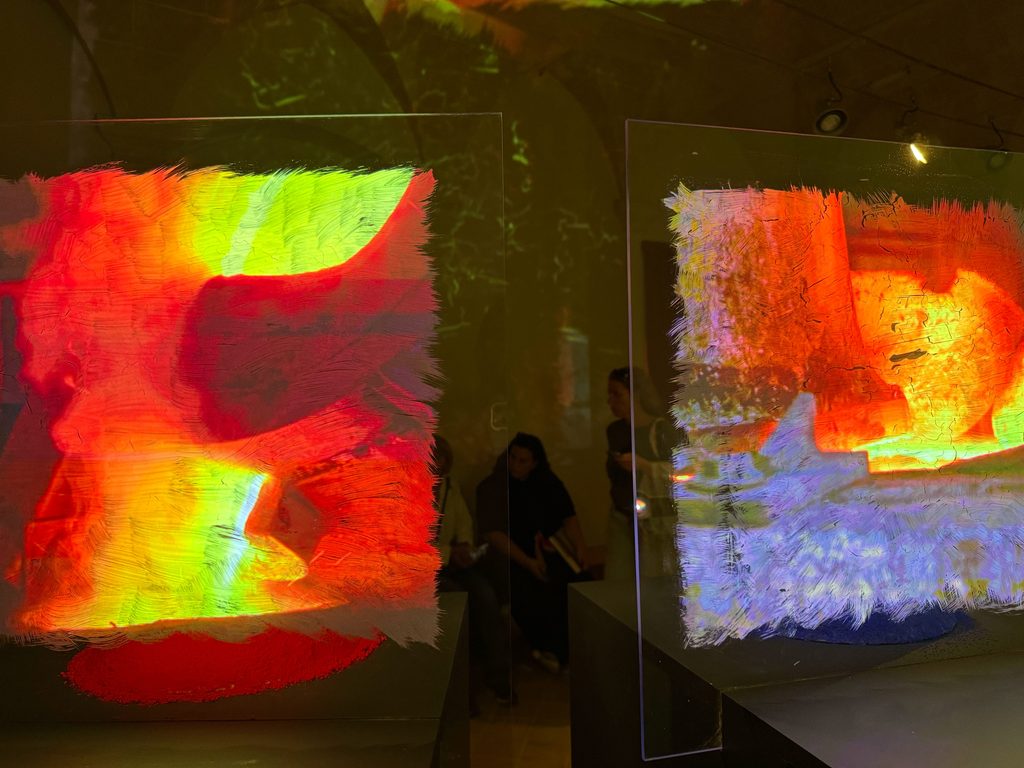
The journey continues at MUSMA (Museum of Contemporary Sculpture in Matera), where the relationship between matter, memory, and technology takes on different forms. Studio Azzurro presents Il Colore dei gesti. Sinfonia Mediterraneo (The Colour of Gestures: Mediterranean Symphony), a vast audiovisual fresco dedicated to the gestures of Mediterranean labour and
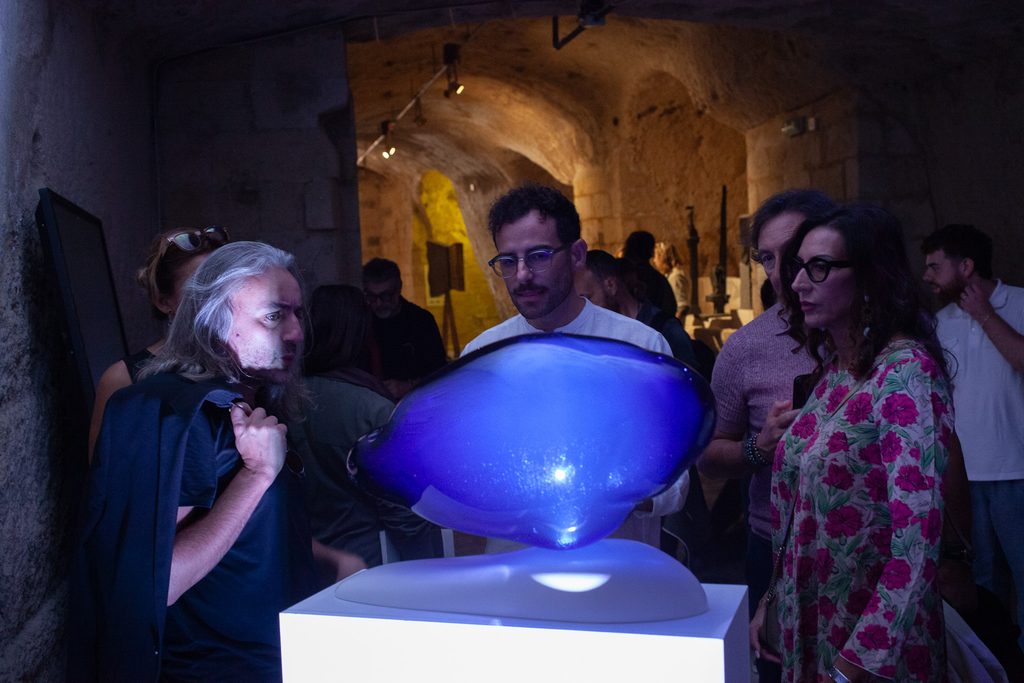
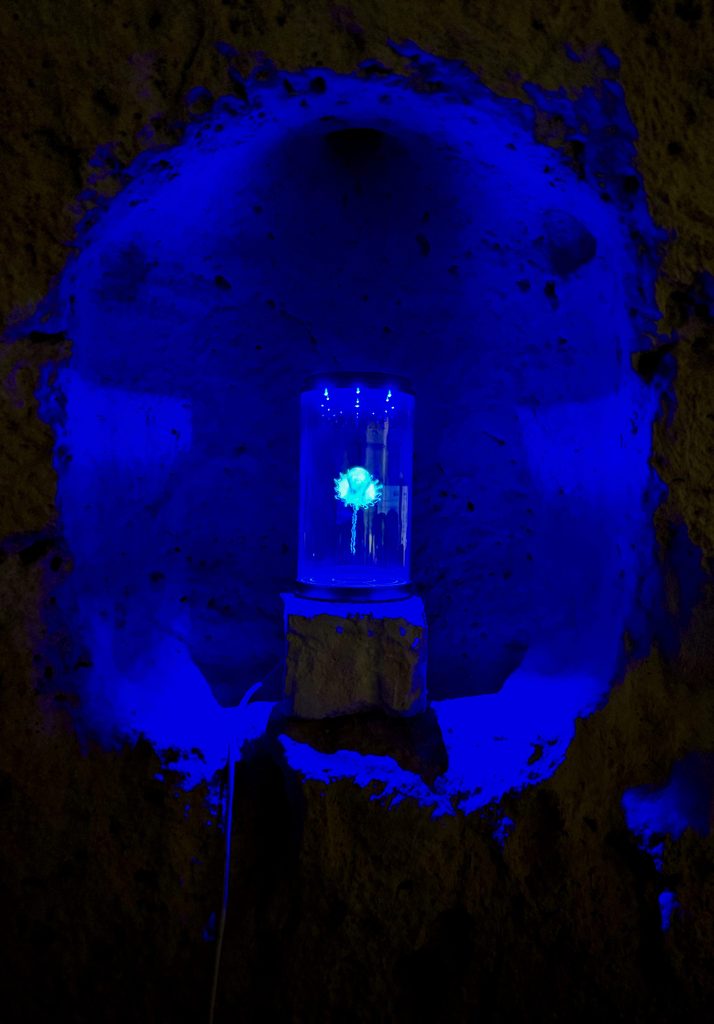
craftsmanship; the hands of fishermen, luthiers, potters, weavers, and other artisans become a universal language capable of transcending cultures and territories, presenting the Mediterranean as a shared heritage of knowledge, signs, and memories. Andrea Crespi presents Thetis, a holographic presence inspired by the jellyfish and the mythological figure of Thetis, suspended between nature, myth, and technology (a project promoted by the One Ocean Foundation and ZEITGEIST19). Latvian artist Valentinaki presents Liquid Blue, an environmental sculpture made of wood, resin, and pigment; conceived as a vibrant, immersive body, it fuses sculptural matter with an original soundscape by Nikola Negorod and Glauk Sound technology, transforming the liquid
element into physical vibration and acoustic waves. Martin Romeo’s Anthropic Cloud is an artificial cloud crafted from Murano glass, wood, and electronics, capable of translating invisible air traffic flows and anthropogenic atmospheric changes into a perceptual experience.
The exhibition concludes with TEMET by Leonardo Antonio Avezzano and Valentin Ammann, a project born from field research in the Algerian Sahara and at the Tassili n’Ajjer UNESCO World Heritage site.
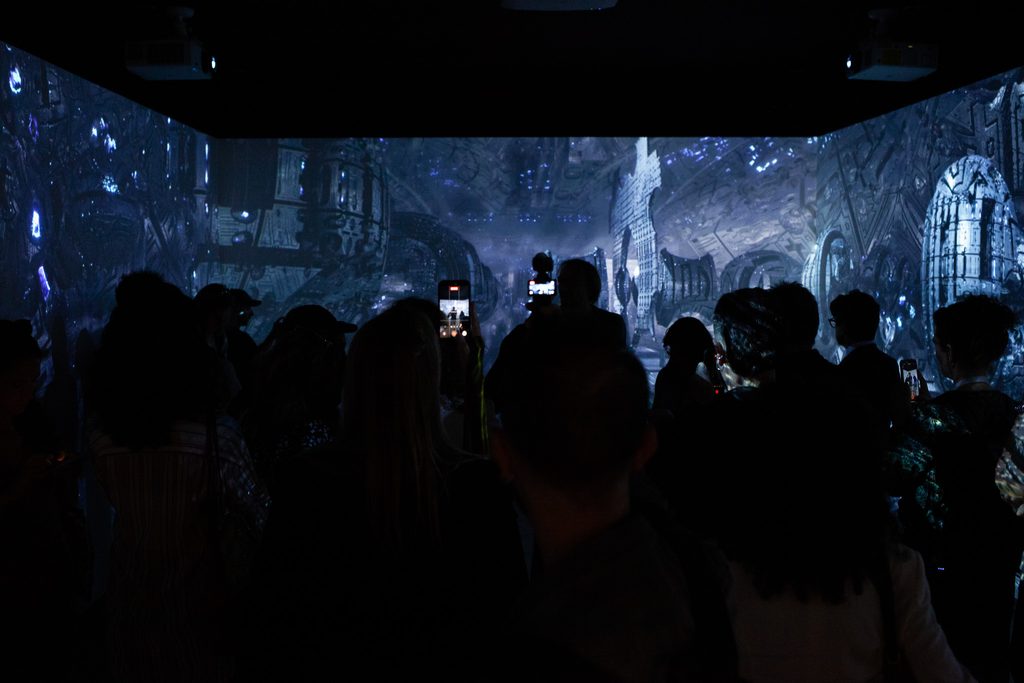
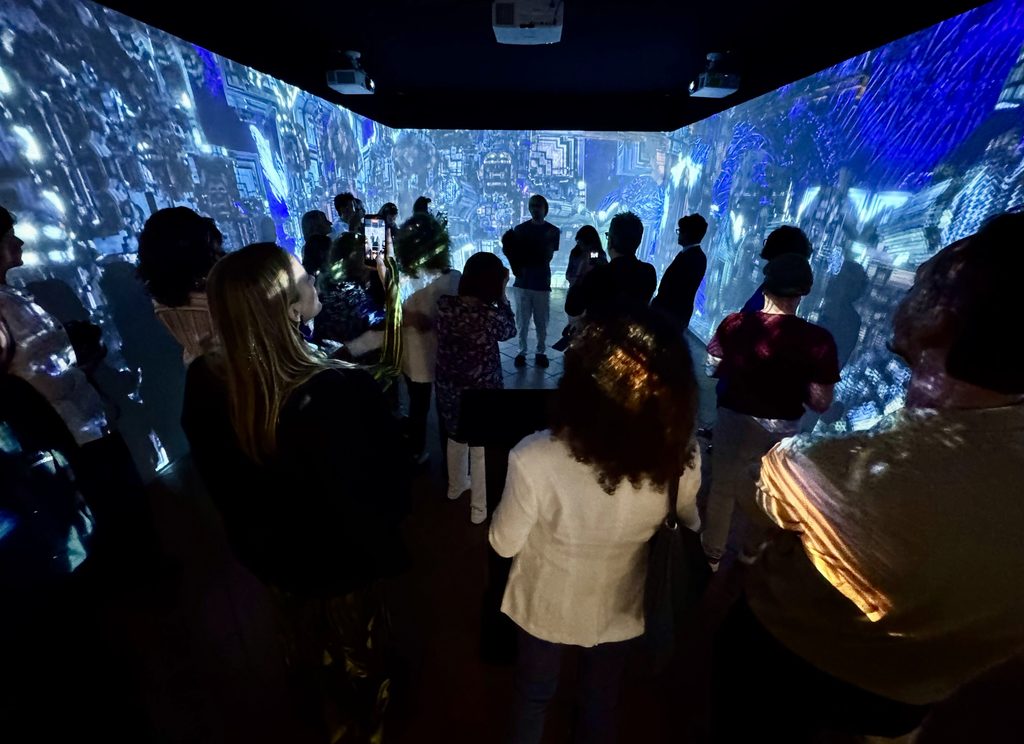
Through photography, documentation, advanced technology, and Tuareg knowledge, Avezzano brings prehistoric rock art to light and recounts ancient European and Mediterranean history, exploring themes of migration and cultural and commercial exchange. Finally, at the Basilicata Open Space (ATP) in Palazzo dell’Annunziata, Foreign Nature (2022) by digital artist Julius Horsthuis leads the visitor into an immersive environment generated through fractal art. Organic structures, coral-like forms, abyssal landscapes, and cosmic configurations unfold within a digital universe that challenges the boundaries between the natural and the artificial, the microcosm and the macrocosm.
THE SEA IS CLOSER THAN YOU SEE therefore presents a Mediterranean to be traversed rather than merely contemplated: a complex system of relationships; a solid, prismatic and pluralistic geography. A Mediterranean that extends beyond the coastline, into the rock, the deserts, the inland cities, bodies in motion, memories and the technological networks that today are constantly
redrawing its boundaries.
THE EXHIBITION’S THEME
The starting point for THE SEA IS CLOSER THAN YOU SEE is the overturning of a deeply held belief: that to belong to the Mediterranean, one must be able to see the sea.
Instead, the project embraces the idea that the Mediterranean is not merely a geographical location, but a relational space. Mediterranean connections extend across the land: they follow trade routes, migration paths, cultural exchanges, languages, religions, techniques, economies, and, today, digital infrastructure.
This perspective is particularly significant for Matera, a city located far from the coast but in which the Mediterranean is inscribed in its geology, history, and culture. The calcarenite of the Sassi is a sedimentary rock of marine origin; the rock-cut architecture and underground systems bear witness to a millennia-long capacity to adapt to the environment and manage water. The city thus carries the sea within itself, even when the sea is invisible.
The exhibition explores this insight through several key concepts: coast and hinterland, mobility and crossing, stratification and cross-fertilization, the South and marginality, migration, ecology, and plural identities.
In this sense, the reference to Franco Cassano’s “Pensiero meridiano” allows us to view Matera not as a place “far” from the Mediterranean, but as a place from which to develop a different conception of the Mediterranean. The border is no longer a line that separates, but the point where differences converge.
The historical perspective offered by Peregrine Horden and Nicholas Purcell is also particularly useful: the Mediterranean is a constellation of distinct micro-ecologies and territories, linked by continuous networks of connections. Matera can thus be reinterpreted—and consequently understood—as a Mediterranean network of ecological, cultural, anthropological, and historical
relationships.
Finally, Predrag Matvejević’s “Mediterranean Breviary” suggests a method of observation grounded in concrete traces: ports, words, objects, architecture, rituals, materials, and paths. It is this concrete dimension that the exhibition aims to convey—beyond the abstract image—of a Mediterranean as sediment, gesture, movement, memory, and relationship.
This also underpins the decision to deliberately move beyond the postcard-perfect image of the Mediterranean. In place of the blue sea and the tourist horizon, we see deserts, stones, bodies, artificial clouds, data, fossils, rock art, communities setting out on their journeys, and waters flowing through diverse territories.
DIGITAL ART AND ARTIFICIAL INTELLIGENCE
The digital component of the exhibition also constitutes a genuine curatorial and cognitive methodology.
The works utilize various technologies—immersive video, generative fractals, holography, computer vision, data tracking systems, sound technology, and artificial intelligence—to make perceptible phenomena that normally elude direct experience.
Digital technology thus becomes a tool for visualizing the invisible: atmospheric flows, water movements, data, climate changes, lost memories, and images erased by time.
In WATER: Always different, always the same, Giuseppe La Spada uses computer vision and motion analysis to transform images of water into data regarding speed, trajectories, flows, and turbulence. The work thus creates a comparison between two forms of knowledge: the sensory knowledge of the human eye and the analytical knowledge of the computational eye.
In Anthropic Cloud, Martin Romeo uses flight path data to make tangible the presence of invisible infrastructure traversing the atmosphere. Technology becomes a tool for environmental and geopolitical awareness, capable of translating a global phenomenon into a local experience.
In The Forgotten Sea & Memory of Stone, Baris Gencel uses artificial intelligence as a tool for interpreting the geological memory of Matera. The generated images transform the human face into a fossil, coral, shell, and organism, constructing an ideal genealogy that connects water, memory, networks, and intelligence.
Even more explicit is the juxtaposition of past and present in Silvio Giordano’s Lucania 2026. AI serves not merely to modify a pre-existing image, but to introduce a temporal rupture within Carlo Levi’s Lucania ’61. The technology allows us to examine the transformation of the Lucanian community: from the collective dimension depicted by Levi to contemporary dispersion and
depopulation. The exhibition thus offers a vision of artificial intelligence that is far removed from both technophile
enthusiasm and the mere celebration of novelty. AI is viewed as a new language through which to explore memory, identity, the environment, and social transformations.
In this context, technology becomes a new form of traversal: just as water connects different territories, data connects distant places; just as memory leaves traces in the landscape, algorithms collect, process, and recombine traces of reality.
Technical details:
THE SEA IS CLOSER THAN YOU SEE
Curated by Chiara Canali, in collaboration with Simona Spinella
Artists:
Leonardo Antonio Avezzano with Valentin Ammann, Andrea Crespi, Baris Gencel, Silvio Giordano, Julius
Horsthuis, Giuseppe La Spada, Martin Romeo, Studio Azzurro, Valentinaki.
Dates:
3 rd October – 8 th December 2026
Where:
Matera
Venues
Palazzo Lanfranchi – National Museum of Medieval and Modern Art of Basilicata
Piazza G. Pascoli 1, Matera
Hours: Monday through Sunday from 9:00 a.m. to 8:00 p.m. Tuesday: from 2:00 p.m. to 8:00 p.m. Last
admission: 7:00 p.m.
Admission Fees Adults: €10.00
Combined ticket valid for 2 days at all National Museum locations: €15.00
Annual pass valid at all National Museum locations: €25.00
Students (for each National Museum location): €2.00
Minors (under 18): Free
Young adults (ages 18–25): €2.00
Military personnel, law enforcement, journalists, academics: Free
Email: Mn-mt@cultura.gov.it
Tel. 0835.256262
MUSMA – Museum of Contemporary Sculpture in Matera
Via San Giacomo Caveoso, Matera
Hours: Monday through Sunday from 10 a.m. to 6 p.m. Last admission: one hour before closing.
Combined MUSMA + TAM Ticket Price:
Full-price exhibition ticket: €12.00
Reduced-price exhibition ticket: €6.00
Email: info@musma.it
Tel. 366 9357768
TAM – Tower Art Museum
Entrance at Via Ridola 13, Matera
Hours: Wednesday through Sunday from 10 a.m. to 8 p.m. Last admission: 7:00 p.m.
Reservations are recommended at visite@museotam.com for groups and special visit requests.
The TAM is spread across two locations: the museum entrance and the start of the exhibition route are at Via
Ridola 13, and the exhibition continues at Via Gradelle Pennino 9.
Museum staff will accompany visitors as they move between the two locations.
MUSMA + Combined Ticket Price:
Full-price admission: €12.00
Reduced-price admission: €6.00
Email: info@museotam.com
Phone: 0835 403727
Basilicata Open Space – APT
Piazza Vittorio Veneto, c/o Palazzo dell’Annunziata
Winter hours: 9:30 a.m. – 1:30 p.m. / 3:30 p.m. – 6:30 p.m.
Free admission
Email: infopoint@aptbasilicata.it
Phone: 0835 406464
Tel. 0835 408816


FOLLOW US